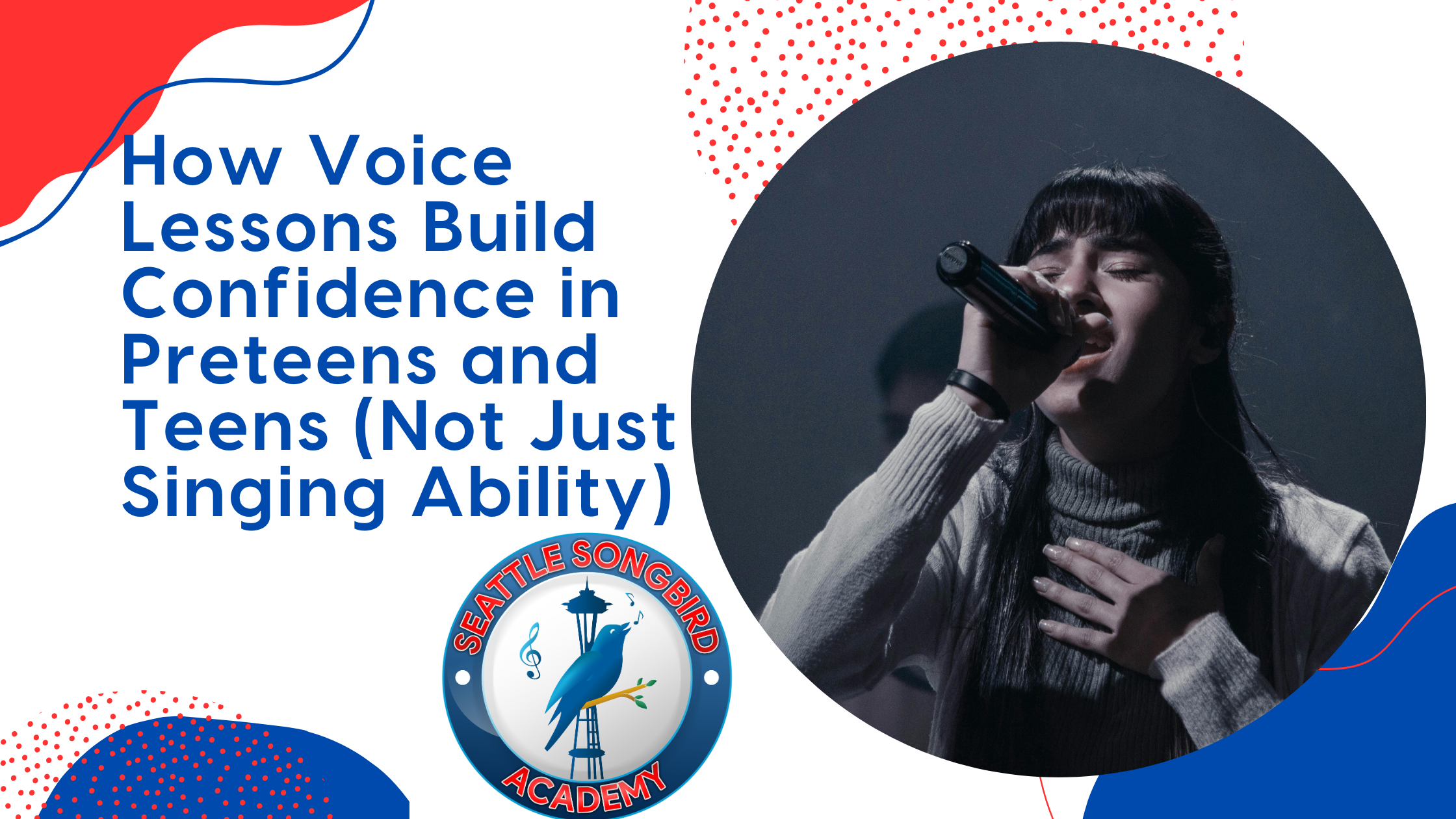
How Voice Lessons Build Confidence in Preteens and Teens (Not Just Singing Ability)
When most people think about voice lessons, they think about learning to sing better. And while developing healthy vocal technique is certainly important, the benefits of voice lessons extend far beyond music.
Learning to use your voice builds confidence, communication skills, and self-trust—qualities that support preteens and teens not only on stage, but in school, relationships, auditions, and everyday life.
At Seattle Songbird Academy, founder Tonya Broucek believes that singing isn’t just about hitting the right notes. It’s about helping students discover the strength and confidence that’s already inside them.
Here’s how voice lessons help students grow far beyond their singing ability.
Learning to Use Your Voice Builds Self-Confidence
Confidence doesn’t usually appear overnight.
It’s built through small moments of success, trying new things, and learning to trust yourself.
For many preteens and teens, singing can feel vulnerable. Sharing their voice requires courage. As students learn healthy technique and experience progress over time, they begin to realize that they are capable of more than they thought.
That confidence doesn’t stay in the voice studio.
It follows them into classrooms, friendships, auditions, presentations, and other areas of life where they are asked to speak up and be seen.
Voice Lessons Create Something Solid to Rely On
Nerves are a normal part of performing—or even speaking in front of others.
One of the biggest gifts technique provides is consistency.
Breath support, posture, vocal coordination, and healthy habits give students tools they can rely on when emotions run high. Instead of hoping things go well, they develop skills that help them stay grounded and confident.
Technique doesn’t eliminate nerves.
It simply gives students something stronger than fear to trust.
Singing Strengthens Communication Skills
Learning to sing teaches students how to express themselves clearly and intentionally.
They become more aware of:
- Breath and posture
- Body language
- Vocal projection
- Emotional expression
- Storytelling and connection
These skills transfer naturally into everyday communication. Whether giving a class presentation, participating in an audition, or simply speaking with confidence, students learn how to communicate with greater ease and authenticity.
Progress Teaches Resilience
Not every lesson feels easy.
There are days when a song feels difficult or a skill takes longer to master than expected. But those moments are valuable.
Voice lessons teach students that growth is a process.
They learn that mistakes aren’t failures—they’re part of learning. They discover how to keep showing up, trust the process, and celebrate progress instead of perfection.
These lessons in perseverance often become some of the most valuable takeaways from music education.
Confidence Comes From Knowing Who You Are
One of the most rewarding parts of teaching young singers is watching them grow into themselves.
As students develop their voice, they also begin to discover:
- What styles they love
- What stories they want to tell
- What makes them unique
- How they want to show up in the world
Confidence isn’t about becoming someone else.
It’s about becoming more comfortable being yourself.
And that kind of confidence lasts long after a performance ends.
Music Education Supports the Whole Person
Music education does more than teach technical skills.
Research and experience continue to show that music supports emotional growth, creativity, discipline, and personal development.
At Seattle Songbird Academy, we believe that voice lessons should nurture the whole student—not just the singer.
If you’d like to learn more about the lasting impact music education can have on young people, we invite you to read our article:
Empowering Teens Through Music Education
Confidence Begins With Feeling Safe
Students don’t become confident because they’re pushed.
They become confident because they’re supported.
A safe, encouraging environment allows preteens and teens to take risks, make mistakes, and discover what they’re capable of. Over time, that support helps transform uncertainty into confidence and self-trust.
That’s why creating a judgment-free environment is at the heart of everything we do at Seattle Songbird Academy.
Is Your Child Ready for Voice Lessons?
Sometimes parents wonder if their child needs more experience before beginning voice lessons.
The truth is, confidence isn’t something students develop before they start.
It’s something they build through the process.
If you’re wondering whether now is the right time, our article:
7 Signs Your Preteen or Teen Is Ready for Voice Lessons
can help you recognize when your child may be ready to begin.
Frequently Asked Questions
Can voice lessons help shy teens build confidence?
Absolutely. Voice lessons provide a supportive environment where students learn to express themselves, develop communication skills, and gradually become more comfortable performing and speaking in front of others.
How do voice lessons improve confidence?
Voice lessons help students develop self-trust through consistent practice and progress. As they gain technical skills and overcome challenges, they become more confident in both music and everyday life.
Are voice lessons only for students who want to perform?
Not at all. Many students take voice lessons simply because they love music. The confidence, communication skills, and self-awareness they develop benefit them regardless of whether they pursue performing.
What age is best to start voice lessons?
Seattle Songbird Academy works with students as young as eight years old. Lessons are tailored to each student’s age, development, and goals, creating a strong foundation for long-term growth.
Why is music education important for teens?
Music education supports creativity, discipline, emotional development, and confidence. It helps students learn perseverance and provides valuable skills they can carry into every area of life.
Take the First Step Toward Confidence
Confidence isn’t something students are born with.
It’s something they build—one lesson, one breakthrough, and one small victory at a time.
At Seattle Songbird Academy, founder Tonya Broucek creates a supportive environment where preteens and teens can develop healthy vocal technique while growing in confidence, communication, and self-expression.
If your child loves to sing—or simply wants to discover what they’re capable of—we invite you to begin with a complimentary introductory session.
Book your complimentary session here:
Sometimes learning to sing is about much more than music.Sometimes it’s about learning to stand confidently in your own voice.