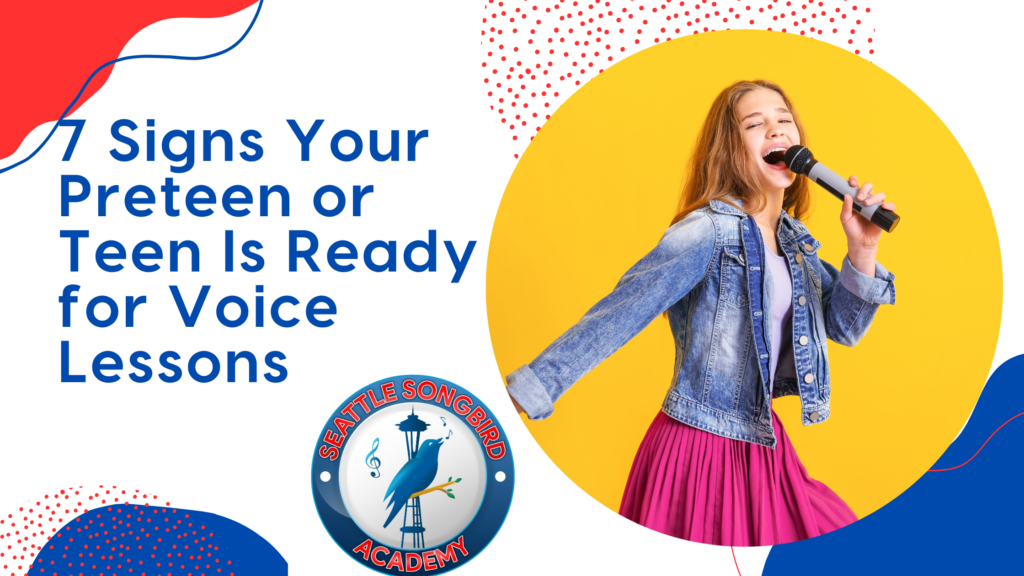
Is Your Preteen or Teen Ready for Voice Lessons? 7 Signs It’s Time to Start
If your child loves to sing, you may be wondering: Is now the right time to start voice lessons?
It’s a common question — and an important one. The truth is, voice lessons aren’t just for students who want to pursue singing professionally. They’re for preteens and teens who are curious, motivated, and ready to start using their voice in a healthy, supported way.
If you’re on the fence, here are seven clear signs your preteen or teen may be ready for voice lessons — and why starting sooner (not later) can make a meaningful difference.
1. They’re Constantly Singing (At Home, in the Car, Everywhere)
If your preteen or teen is always singing — whether it’s along to the radio, in the shower, or under their breath — that’s a strong indicator of both interest and instinct.
Voice lessons help take that natural inclination and give it structure. Instead of guessing or mimicking what they hear, they begin to understand how their voice works and how to use it intentionally.
2. They’ve Expressed Interest in Performing
Whether it’s choir, musical theatre, talent shows, or auditions, an interest in performing is a clear signal that your preteen or teen is ready for more focused guidance.
Voice lessons provide the technical foundation that supports performance — things like breath control, vocal stamina, and confidence under pressure. It’s not just about singing well; it’s about feeling prepared when it matters most.
3. They Get Frustrated With Their Voice
Many preteens and teens reach a point where they want to improve but don’t know how. They may struggle with hitting certain notes, experience vocal fatigue, or feel like their voice is inconsistent.
This kind of frustration is actually a positive sign — it means they’re ready for tools and direction. With proper instruction, those challenges become opportunities for growth instead of roadblocks.
4. Their Voice Is Changing
Adolescence brings significant vocal changes, and for many preteens and teens, this can feel unpredictable or even discouraging. Cracking, shifting range, and loss of control are all completely normal, and affect male and female voices alike.
This is also one of the most important times to have guidance. Voice lessons help students navigate these changes safely, building coordination and confidence as their voice develops.
5. They’re Ready to Focus and Take Direction
Voice lessons don’t require perfection — but they do require a willingness to try, listen, and stay engaged.
If your preteen or teen can follow instructions, stay present for a lesson, and practice (even a little) between sessions, they’re ready. Growth comes from consistency, not natural ability alone.
6. They Want to Improve — Not Just “Be Good”
There’s a difference between enjoying singing and wanting to get better. If your preteen or teen is asking questions, repeating songs to improve, or showing curiosity about how their voice works, that’s a key indicator of readiness.
This kind of mindset is where real progress happens. Technique gives them a path forward.
7. You Want Them to Build Confidence and Life Skills
Voice lessons aren’t only about singing. They help students develop confidence, communication skills, discipline, and self-awareness.
Learning to use your voice — literally and figuratively — has an impact far beyond music. Many parents find that voice lessons support their child’s growth in school, social settings, and leadership opportunities.
Do They Need to Wait Until They’re Older?
One of the biggest misconceptions about voice lessons is that students should wait until their voice is “fully developed.”
In reality, starting earlier with proper technique is often the better choice. Healthy vocal habits, breath support, and coordination can all be taught in age-appropriate ways. Waiting can sometimes allow unhelpful habits to form — and those are much harder to undo later.
At Seattle Songbird Academy, we work with both preteens and teens, with many students beginning as young as 8 years old. Each lesson is tailored to the student’s age, development, and individual needs — so they can grow safely and confidently at every stage.
Take the Next Step
If you’re seeing these signs in your preteen or teen, this could be the perfect time to explore voice lessons in a supportive, low-pressure way.
Seattle Songbird Academy offers a complimentary introductory session with founder Tonya Broucek, designed to help you and your child get a feel for the experience, ask questions, and receive personalized guidance. It’s a chance to understand where their voice is right now — and what’s possible with the right support.
Starting is often the hardest part — but it can also be the most exciting.
Frequently Asked Questions About Voice Lessons for Preteens and Teens
What age should a child start voice lessons?
Many students can begin voice lessons as early as 8 years old, depending on their interest, attention span, and readiness to follow guidance. At this stage, lessons focus on healthy vocal habits, basic technique, and confidence-building in an age-appropriate way. For preteens and teens, lessons can become more structured and technique-driven as their voice develops. The key is starting when the student is curious and engaged — not waiting for a “perfect” age.
How do I know if my child needs voice lessons?
If your child loves to sing, shows interest in performing, or feels frustrated with their voice, those are strong indicators that voice lessons could help. Many preteens and teens reach a point where they want to improve but don’t know how. Lessons provide clear guidance, structure, and healthy technique. Even beginners benefit from learning how to use their voice correctly from the start.
Are voice lessons good for beginners?
Yes — voice lessons are ideal for beginners, especially preteens and teens who are just starting to explore their voice. Beginning with proper technique helps prevent strain and builds a strong foundation for future growth. Students learn breath support, pitch matching, and vocal control in a supportive environment. Starting as a beginner often leads to faster, more sustainable progress.
How often should my preteen or teen take voice lessons?
Most students benefit from weekly voice lessons, which allow for consistent progress and skill development. Singing relies on muscle coordination, and regular practice helps reinforce what is learned each week. Occasional or inconsistent lessons tend to slow progress. A steady routine creates the best results over time.
Can voice lessons help shy or introverted teens?
Absolutely. Voice lessons can be a powerful way for shy or introverted teens to build confidence in a safe, supportive setting. Singing encourages self-expression while developing posture, breath, and presence. Over time, many students become more comfortable performing and speaking up in other areas of life. The goal is growth, not pressure.
What’s the difference between choir and private voice lessons?
Choir focuses on group singing and blending with others, while private voice lessons focus on the individual singer. In one-on-one lessons, students receive personalized feedback on technique, range, and vocal health. This helps them improve more quickly and safely. Many students benefit from doing both, as they complement each other well.
Do voice lessons really make a difference?
Yes — with consistent training, most students see noticeable improvement in tone, range, control, and confidence. Voice lessons provide the tools and structure that self-teaching often lacks. They also help prevent harmful vocal habits that can limit progress. Over time, students develop both skill and confidence in their voice.
How long does it take to see progress in voice lessons?
Many students begin to notice small improvements within the first few weeks, especially in awareness and control. More significant changes in tone, range, and confidence typically develop over a few months of consistent lessons. Progress depends on practice, consistency, and individual development. The most important factor is staying engaged in the process.
Are online voice lessons effective for teens?
Yes — online voice lessons can be very effective when taught with strong technique and structure. Students can still receive real-time feedback, guidance, and personalized instruction. Many families appreciate the flexibility and convenience of online learning. The quality of teaching matters more than the format.
What should my child expect in their first voice lesson?
The first lesson is typically focused on getting comfortable, exploring the voice, and understanding where the student is starting. This may include simple warm-ups, light vocal exercises, and a short song. It’s also a time to ask questions and set goals. The experience is designed to feel supportive, not intimidating.